


we offer a small collection of plum scionwood selected for northern growing, good fruit, and interesting cold-climate genetics.
early golden — an old ontario selection discovered as a chance seedling near fonthill and introduced before 1946. treated commercially as a japanese-type plum, it produces sweet, firm, golden freestone fruit with an attractive red blush and ripens exceptionally early—roughly two weeks before ‘shiro.’ the tree is notably vigorous and productive.
south dakota — a historic northern plum released by the university of minnesota in 1949, from the great period of upper-midwestern breeding that combined cold-hardy american plum genetics with improved fruit quality. we particularly value this sort of old northern germplasm: tough, vigorous fruit genetics developed for climates where ordinary orchard plums can struggle.
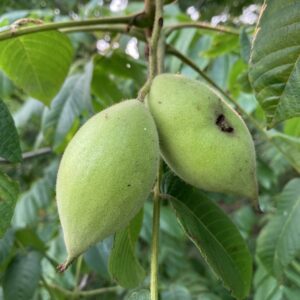
‘harvest moon’ american plum — our own mooncrater selection of prunus americana, propagated from an exceptional seedling selected for unusually large fruit and tremendous production. this is a young selection that we are beginning to distribute clonally while continuing to observe it in cultivation. every scion is taken from the original selected genetics.
what is scionwood?
scionwood is dormant one-year growth used to reproduce a fruit cultivar by grafting. rather than planting a seed and producing a genetically new tree, you graft a piece of the cultivar you want onto a compatible rootstock. once the graft takes, everything growing above that union is genetically identical to the original cultivar.
it’s an inexpensive way to build a diverse orchard. you can graft a scion onto a young seedling rootstock to create a new tree, topwork an established plum, or put several cultivars onto the same tree.
we are particularly fond of grafting plums onto vigorous seedling rootstocks, including american plum. rather than trying to make the smallest possible orchard tree, we like the resilience, genetic diversity, and long-term vigor that seedlings bring to the equation.
scionwood is shipped dormant and is propagation material rather than a rooted plant. keep it cool and moist until grafting time, and graft onto compatible actively growing rootstock in spring.
for growers new to grafting, don’t be intimidated by it. fruit trees have been passed from one generation and one orchard to another this way for centuries. a handful of dormant sticks can become an orchard.

Reviews
There are no reviews yet.