


these hybrid hazelnuts descend from one of the longest-standing northern breeding populations — a mix of american hazelnut (corylus americana) and european hazelnut (corylus avellana), crossed and re-crossed over generations. the goal has always been clear: combine the cold hardiness and disease resistance of the native with the larger nut size of the european, creating vigorous, productive shrubs for orchard, homestead, and wildlife planting.
the seedlings offered here carry that lineage forward. they are hardy to northern winters, blight-tolerant, and vigorous growers, capable of forming thickets 8–12 feet tall. nuts vary in size and shape but are generally larger than wild american types, often clustering in generous husks. while still seedlings (not grafted named cultivars), they represent the genetic diversity and resilience that makes hybrid hazelnuts so valuable for long-term plantings.
ornamentally, hazelnuts are handsome shrubs with rounded leaves that turn yellow in fall. in late winter, they send out drooping catkins — among the earliest pollen sources for bees — followed by lush summer foliage. their spreading, multi-stem habit makes them as useful for hedges and windbreaks as for nut production.
ecologically, hazelnuts are a powerhouse. they provide dense cover for birds, browse for deer, and nuts for squirrels, turkeys, and other wildlife. in silvopasture systems, they work as living fence and shade, while also producing a high-value perennial crop.
planting notes
height: 8–12 ft (multi-stem shrub)
spread: suckering, forms thickets
soil: adaptable; prefers well-drained loam
light: full sun to part shade (better nut set in sun)
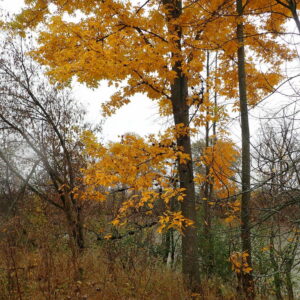
fall color: yellow
growth: fast, resilient, blight-tolerant
wildlife: early pollen for bees, nuts for birds and mammals, dense cover
Reviews
There are no reviews yet.