

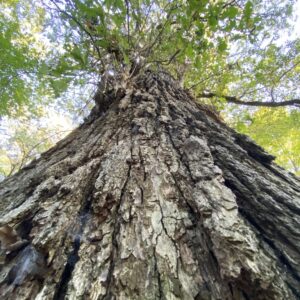
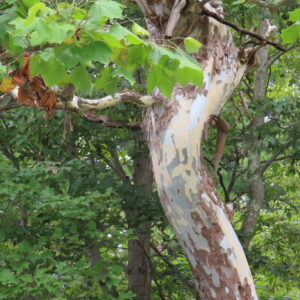
shagbark hickory is one of the great nut trees of north america — stately, long-lived, and richly generous to both people and wildlife. reaching 60–80 feet with strong, upright trunks, its name comes from the distinctive strips of bark that curl and peel away in long plates, giving even young trees a rugged, textured beauty.
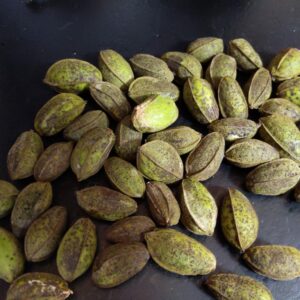
the nuts are legendary. encased in thick husks, they split open in autumn to reveal sweet, buttery kernels — often considered the finest-flavored of all hickories, rivaling pecans. squirrels, chipmunks, wild turkeys, and bears eagerly harvest them, while foragers treasure them for fresh eating, baking, nut butters and nut milk.
shagbark hickory also has unique ecological roles. its shaggy bark creates roosting habitat for several bat species, including the endangered indiana bat, which uses mature hickories as nursery trees for raising their young. the leaves host a wide array of moth and butterfly caterpillars, making the species a cornerstone of forest biodiversity.
in autumn, shagbark hickory foliage turns a warm golden yellow, lighting up woodlots and yards before the leaves drop. the trees are tough and adaptable: while they prefer deep, fertile soils, they can handle rocky uplands, drought, and the harsh winters of the northeast. the wood is famously strong and flexible, long used for tool handles, furniture, and traditional smoking.
planting notes
- height: 60–100 ft
- soil: prefers deep, rich soils; tolerates rocky and dry uplands
- light: full sun to part shade
- fall color: golden yellow
- growth: slow to moderate; very long-lived
- wildlife: nuts for squirrels, turkeys, bears, and people; bark roosts for bats; leaves host moth and butterfly caterpillars
Reviews
There are no reviews yet.