

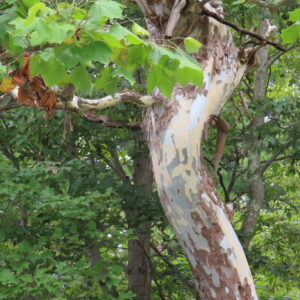
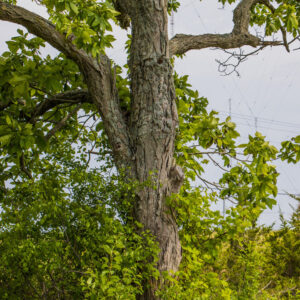
yellowbud hickory, also called bitternut, oil nut, or swamp hickory, is one of the most strikingly beautiful hickories in form. tall, straight trunks with fine branching create a commanding presence in the forest canopy, rivaling any hardwood in grace and stature.
though the nuts are too bitter for fresh eating, they are among the thinnest-shelled of all hickories, and when pressed yield a golden oil with a rich, shagbark-like flavor. the bitterness resides in water-soluble compounds, leaving the extracted oil smooth, savory, and nourishing. this makes yellowbud one of the most promising perennial sources of vegetable oil in the world. indigenous peoples and early settlers alike made use of hickory nuts for both food and oil, and the species holds untapped potential for modern agroforestry.
ecologically, yellowbud hickory produces heavy, reliable nut crops that sustain squirrels, turkeys, deer, and countless other wildlife. the leaves host a wide range of moth and butterfly larvae, while the strong, open crowns provide nesting space for birds.
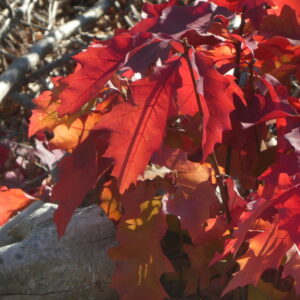
ornamentally, the tree’s clean form and upright branching make it one of the most elegant hickories. in autumn, the leaves turn a clear yellow, brightening forests and homesteads alike. tough and adaptable, it grows well in a range of soils and is hardy throughout the northeast, but it prefers moist bottomlands. a great choice for a wetter planting site.
planting notes
- height: 60–100 ft
- spread: 40–60 ft
- soil: deep, moist well-drained soils preferred; adaptable to uplands
- light: full sun to part shade
- fall color: bright yellow
- growth: moderate; long-lived
- wildlife: nuts for squirrels, deer, turkeys, and other animals; foliage hosts caterpillars; strong crowns for bird habitat
Reviews
There are no reviews yet.