

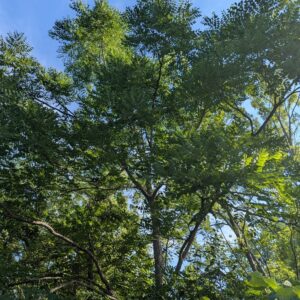
mulberries are fast-growing, heavy-bearing fruit trees with a deep history in both farmscapes and city streets. our seedlings come from a massive old street tree in burlington, vermont — a mother that produced prodigious crops of huge red berries each summer, feeding birds, squirrels, and anyone lucky enough to pick them fresh.
most seedlings of this type are hybrids between the native red mulberry (morus rubra) and the introduced white mulberry (morus alba). hybrid swarms like these are vigorous and adaptable, combining the hardiness of alba with the rich, sweet flavor of rubra. berries range from deep red to almost black when fully ripe, with a taste somewhere between blackberry and fig. crops are abundant and long-lasting, often ripening over weeks in early to midsummer.
mulberries are excellent multipurpose trees: shade-giving, fast-growing, tolerant of poor soils and urban stress, and unmatched in fruit output. they are beloved by birds and wildlife, and in silvopasture systems the dropped fruit provides seasonal forage for poultry, pigs, and other livestock. the wood is durable, and the trees can be pruned into hedges or coppice systems if desired.
ornamentally, mulberries are informal but handsome, with broad crowns, glossy leaves, and a graceful spreading habit. in fall, the foliage turns yellow before dropping. whether for fruit, shade, or wildlife, these hybrid mulberries are rugged survivors with generous yields.
planting notes
-
height: 30–50 ft
-
soil: adaptable; thrives in loam, sand, or clay
-
light: full sun to part shade
-
fall color: yellow
-
growth: fast; very resilient
-
wildlife: heavy berry crops for birds, poultry, and mammals; shade and cover for habitat
Reviews
There are no reviews yet.