


sugar maple (acer saccharum) needs little introduction — it is the signature tree of the northeastern forest, the source of the finest maple syrup in the world, and one of the most spectacular displays of fall color on earth. what it does need is the right genetics for your site, and that is where provenance matters.
most nursery sugar maples are grown from seed of unknown or southern origin, producing trees that may struggle in cold northern winters or leaf out too early and get caught by late frosts. our seedlings come from wild trees in st. lawrence county, northern new york — zone 4b on the canadian border, where sugar maples have been selected by hard winters for generations. these are genuinely cold-hardy trees with the genetics to thrive in maine and new england climates without reservation.
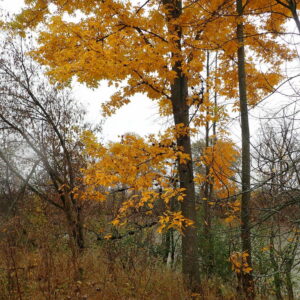
ornamentally, sugar maple is unmatched for fall color — the full spectrum from gold to orange to scarlet, often on the same tree, reliable year after year. it grows into a stately, dense-crowned shade tree over decades, valuable as a specimen, street tree, or woodland edge planting. the winged samaras are beloved by children and ecologically important as an early seed source for small mammals and birds.
ecologically, sugar maple is a foundational species of the northern hardwood forest, providing mast, cover, and habitat structure across its lifespan. it hosts a significant diversity of moth and butterfly caterpillars and its early spring flowers are an important nectar source for native bees emerging before most trees have leafed out.
for syrup production, a single mature sugar maple yields 10-20 gallons of sap per season, producing roughly a quart of finished syrup. planted today, tappable in 30-40 years — a genuine long-term investment in your land.
planting notes
height: 60–75 ft at maturity
spread: 40–50 ft, broad rounded crown
soil: prefers moist, well-drained loam; avoid compacted or waterlogged soils
light: full sun to part shade
fall color: gold, orange, and scarlet — among the finest of any native tree
growth: moderate; long-lived
wildlife: caterpillar host plant; early spring nectar source; samaras feed small mammals and birds
syrup: tappable at 10–12 inch diameter, typically 30–40 years from planting
Reviews
There are no reviews yet.