
monarda didyma — scarlet bee balm — is one of the great native perennials of the eastern woodland edge, a plant that has been earning its place in gardens for centuries on the strength of its extraordinary flower display, its powerful fragrance, and its deep roots in both ecological and human history.
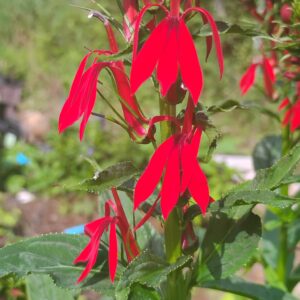
in midsummer the stems rise two to four feet, topped with dense, shaggy flower heads in brilliant scarlet — a red so saturated it reads almost as a beacon, which is precisely the point. ruby-throated hummingbirds find monarda irresistible, returning to the patch repeatedly throughout the day and defending flowering stems from other hummingbirds with territorial intensity. large bumblebees with tongues long enough to reach the tubular flowers work alongside them, while smaller bees and butterflies gather at the accessible parts of the inflorescence. the bloom period extends from midsummer well into late summer with deadheading, making it one of the longer-flowering native perennials in the garden.
the fragrance is distinctive and complex — strongly herbal, somewhere between oregano and earl grey tea, with a medicinal sharpness underneath. it fills the air around the plant on warm days and intensifies dramatically when the leaves are brushed or crushed. this fragrance is not incidental but functional: it reflects a rich chemistry of thymol, carvacrol, and other volatile compounds that give the plant its antimicrobial and medicinal properties and deter most browsing animals, making monarda effectively deer resistant in most situations.
the human relationship with monarda didyma is long and well documented. the oswego people of the great lakes region used it extensively as a tea herb — oswego tea was adopted by colonial settlers after the boston tea party as a substitute for british imports, and the plant carries that history in one of its common names. eastern woodland peoples used preparations of the leaves and flowers for colds, fevers, digestive complaints, and skin infections, exploiting the same thymol chemistry that makes the plant a genuine antimicrobial. the flowers and young leaves are edible and make excellent herbal teas, both fresh and dried, with a flavor profile that pairs well with fruit and honey.
ecologically, monarda occupies a specific and valuable niche. it is native to moist woodland edges, streambanks, and rich forest openings across the eastern united states — habitats defined by moisture, partial shade tolerance, and fertile soils. in the garden it performs best in consistently moist, well-drained soil with good air circulation, spreading steadily by rhizome to form dense colonies that exclude weeds and stabilize moist soil. a mature monarda patch in full bloom is one of the most ecologically productive spots in the garden during its flowering window.
powdery mildew is the main cultural challenge — a cosmetic fungal issue that affects the foliage in humid summers, turning leaves gray-white in late season. it rarely affects plant health or flowering but can be unsightly. our patch has shown no significant mildew issues so far, which may reflect the coastal maine climate or simply good air circulation in the planting site. choosing a location with good airflow, avoiding overhead watering, and not overcrowding plants are the standard preventive measures. some gardeners simply cut the patch back hard after first bloom, which encourages fresh clean foliage for the remainder of the season.
sold as bareroot rhizome divisions — vigorous, established root sections that establish quickly and bloom in their first season.
planting notes
height: 2–4 ft in bloom
spread: rhizomatous; forms expanding colonies; divide every 2–3 years to maintain vigor
soil: prefers moist, fertile, well-drained soil; avoid waterlogged conditions
light: full sun to part shade; best flowering in full sun with afternoon shade in hot climates
bloom: midsummer through late summer; deadhead for extended flowering
wildlife: primary hummingbird nectar plant; large bumblebees; butterflies
fragrance: strongly herbal, bergamot-oregano character; deer resistant
culinary: leaves and flowers edible; classic oswego tea herb
Reviews
There are no reviews yet.