
rudbeckia hirta is one of the most recognizable wildflowers in north america — a plant so deeply embedded in the visual language of the native meadow that its golden yellow rays and dark central cone have become almost synonymous with late summer itself. native across a broad swath of the eastern and central united states, black-eyed susan thrives in the disturbed soils, roadsides, old fields, and meadow edges that define so much of the northeastern landscape. it is a plant that finds opportunity wherever the ground is open and the sun is full.
in its natural habitat, rudbeckia hirta functions as a pioneer species — one of the first natives to colonize disturbed ground and begin the slow process of meadow succession. it establishes quickly from seed, blooms heavily in its first or second year, and gradually gives way to longer-lived perennial grasses and forbs as the meadow matures. this successional role makes it invaluable in restoration plantings, where its early establishment and prolific seeding help stabilize soil and suppress weeds while slower species get established. it naturalizes readily, reseeding into gaps and expanding gradually without becoming aggressive.
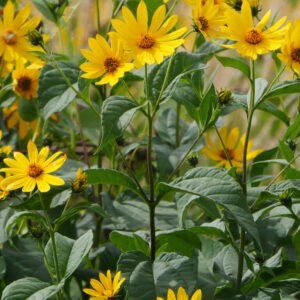
ornamentally, black-eyed susan earns its place in any garden. the flowers open in midsummer — two to three inch blooms with bright golden yellow rays surrounding a raised, velvety dark brown to black cone — and continue in waves through august and september. plants are upright and branching, typically two to three feet tall, with rough, hairy foliage that has a pleasantly tactile quality. in the garden it works beautifully massed in meadow plantings, woven through grasses, or as a front-to-middle border plant. the seed heads that follow the flowers are architecturally interesting through fall and winter, and the plant’s ability to reseed means a small planting can naturalize into a self-sustaining colony over several seasons.
ecologically, rudbeckia is a significant pollinator plant. the flowers provide abundant pollen and nectar across a long bloom window, attracting a wide diversity of native bees including bumblebees, sweat bees, and mining bees. several native bee species show strong preference for rudbeckia pollen. butterflies work the flowers heavily — fritillaries, skippers, and swallowtails are regular visitors — and the plant hosts the larvae of several moth species including the silvery checkerspot butterfly, for which rudbeckia is a primary larval host plant. as the cones ripen into seed heads, goldfinches, chickadees, and other small seed-eating birds work them through fall and winter, making the decision to leave stems standing one of the most ecologically productive things a gardener can do.
rudbeckia has a modest but real herbal tradition. cherokee and other eastern peoples used root preparations as a wash for wounds and skin infections, and as a diuretic and stimulant tea. the roots and leaves contain compounds with documented antimicrobial and immunostimulant activity, related to but distinct from the better-known medicinal properties of its cousin echinacea. it is not a primary medicinal herb today but its traditional uses are well documented and its biochemical activity is real.
planting notes
height: 2–3 ft in bloom
spread: clumping with self-seeding; naturalizes over time
soil: adaptable; tolerates poor, dry, and clay soils; avoid waterlogged conditions
light: full sun; tolerates light shade with reduced flowering
bloom: midsummer through early fall
fall/winter interest: persistent seed heads for birds; structural interest through winter
wildlife: generalist and specialist native bees; butterflies; goldfinches and chickadees
lifespan: short-lived perennial to biennial; self-seeds reliably to maintain colony
Reviews
There are no reviews yet.