

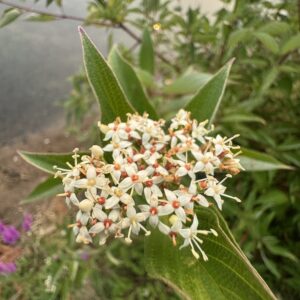
black cherry is one of the most important native trees of the eastern forests — tall, graceful, and invaluable for wildlife. it grows 50–80 feet tall, with a straight trunk, dark flaky bark, and a broad crown. in late spring, it bears long, cascading clusters of fragrant white flowers, followed by dark red to purple cherries in summer.
ornamentally, black cherry is handsome in every season: its spring bloom is showy and fragrant, its glossy leaves turn clear yellow in fall, and its bark develops into a rich, dark, textured surface with age. in the right site it matures into a stately shade tree, while younger stands often form thickets along fencerows and woodland edges.
ecologically, black cherry is a powerhouse. the fruit is one of the top wildlife foods in north america, relished by over 40 species of birds including thrushes, tanagers, and grouse, as well as mammals from foxes to bears. the flowers provide abundant nectar for pollinators, and the foliage supports over 400 species of moth and butterfly caterpillars — making it a keystone host plant for songbirds.
the wood of black cherry is also prized, one of the finest american hardwoods, used for furniture and cabinetry.
the fruit of black cherry is small but richly flavored — sweet, tart, and slightly astringent. traditionally, it has been gathered for jams, jellies, pies, and country wines, prized for its deep color and complex taste. beyond the kitchen, black cherry bark has a long herbal history as a soothing cough remedy, used in syrups and tinctures. the fruit and bark together place black cherry among the most versatile native trees, offering nourishment as well as medicine.
planting notes
height: 50–80 ft
spread: 30–50 ft
soil: adaptable; prefers moist, fertile, well-drained soils but tolerates uplands
light: full sun to part shade
fall color: yellow
growth: moderate to fast; long-lived in the right site
wildlife: fruit feeds birds and mammals; foliage hosts hundreds of lepidoptera; flowers for pollinators
Reviews
There are no reviews yet.