


bear oak (quercus ilicifolia) is one of the most underappreciated native trees in the northeast — a small, gnarled, slow-growing oak of pine barrens and acidic upland soils that has been overlooked by the nursery trade almost entirely, despite possessing exactly the qualities that make a plant genuinely extraordinary in the right hands.
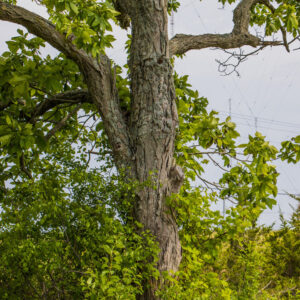
in its native habitat, bear oak is a plant of extremes. it grows in the most challenging soils the northeast has to offer — pure sand, low nutrients, high acidity, exposed to sun and wind with little moisture retention. in these conditions it develops slowly and deliberately, forming dense thickets of twisted, multi-stemmed shrubs and small trees rarely exceeding fifteen to twenty feet even at maturity. the leaves are bold and deeply lobed, dark glossy green above and pale below, turning rich shades of red, orange, and bronze in fall. the bark develops beautiful texture with age — furrowed, dark, expressive. every branch carries the marks of its difficult upbringing in a way that reads as character rather than hardship.
this is where the aesthetic potential of bear oak becomes remarkable. gardeners and designers familiar with the japanese concept of wabi-sabi — the beauty found in imperfection, asymmetry, and the passage of time — will recognize in bear oak something almost impossible to manufacture. its natural growth habit produces exactly the kind of weathered, intentional-looking form that bonsai practitioners spend decades coaxing from their specimens. planted in a garden setting with good soil and occasional thoughtful pruning, bear oak can be maintained as a small specimen tree of extraordinary character — an oak you can actually have in a residential garden without it eventually consuming the property. this is a genuine rarity in the oak world, where most species trend relentlessly toward eighty feet and full canopy dominance.
the common name bear oak is not incidental. black bears rely heavily on the acorns of quercus ilicifolia as a pre-hibernation food source, and the dense thickets it forms provide essential cover for bears, white-tailed deer, ruffed grouse, and countless other species.
most oaks follow a boom-and-bust mast cycle — producing bumper crops every few years and almost nothing in between, a strategy that periodically overwhelms seed predators and allows more seeds to germinate. bear oak is different. it produces acorns more consistently year to year, in smaller but reliable quantities, making it a steadier food source for wildlife across seasons. squirrels, blue jays, turkeys, and white-tailed deer can count on bear oak when other oaks are in their off years. for human foragers, this same consistency makes bear oak acorns a more reliable wild food — smaller than most oak acorns but produced dependably, and processable into flour, porridge, or roasted snacks using the same leaching methods applied to any native acorn.
ecologically, bear oak is a keystone species of the pine barrens ecosystem. it hosts an extraordinary diversity of lepidoptera — over three hundred species of moth and butterfly caterpillars feed on quercus foliage, making any oak one of the highest-value wildlife plants you can put in a landscape. the dense thicket habit provides nesting cover for shrubland birds including prairie warblers, brown thrashers, and eastern towhees — species that are declining as scrubby successional habitat disappears from the northeast. planting bear oak from pine barrens seed stock is a direct contribution to the conservation of a globally rare ecosystem type.
planting notes
height: 8–20 ft at maturity, slow growing and manageable
spread: multi-stemmed, spreading habit; responds well to pruning
soil: strongly prefers acidic, sandy, well-drained soils; tolerates poor and dry conditions; avoid clay and wet soils
light: full sun
fall color: red, orange, and bronze
acorns: small but reliably produced annually; valuable wildlife food
wildlife: keystone lepidoptera host; bears, deer, turkeys, squirrels, grouse, shrubland songbirds
aesthetic: exceptional specimen tree for naturalistic, native, or japanese-influenced garden design; maintains small stature with minimal pruning
Reviews
There are no reviews yet.