

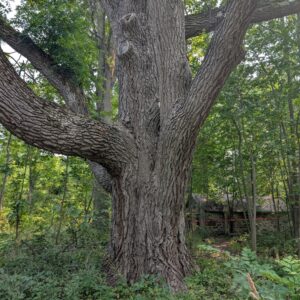
bur oak is a tree of stature and endurance, one of the great oaks of north america. with massive, wide-spreading crowns and deeply furrowed bark, mature specimens can reach 70–100 feet tall and live for centuries, anchoring landscapes with quiet authority.
the leaves are bold, deeply lobed, and turn golden yellow to russet-brown in fall. the acorns are huge! the nuts are among the largest of any oak, capped with fringed, mossy cups that give the species its name. these acorns are a feast for deer, turkeys, squirrels, bears, and countless birds, making bur oak one of the most important wildlife mast trees.
bur oak is as tough as it is grand. it tolerates dry sandy uplands, heavy clay, rocky ridges, and bottomland flooding alike. its thick bark is fire-resistant, allowing it to survive prairie fires where few other trees could, and it remains a keystone species of savannas, prairies, and parklands. in the northeast, it makes an outstanding shade and homestead tree — long-lived, drought-tolerant, and deeply resilient.
ornamentally, bur oak is unmatched for character. its wide, spreading crown casts broad shade, while its fringed acorns and rugged bark give year-round interest. as a specimen in a yard or field, it grows into a tree of mythic presence.
planting notes
-
height: 70–100 ft
-
spread: 60–80 ft
-
soil: highly adaptable; tolerates clay, sand, dry uplands, and floodplains
-
light: full sun
-
fall color: golden yellow to russet-brown
-
growth: moderate; very long-lived
-
wildlife: large acorns for mammals and birds; foliage hosts hundreds of caterpillars; strong limbs for nesting
Reviews
There are no reviews yet.